
LM Veterinary Acupuncture
Helping keep animals pain-free, from the comfort of their home
A dedicated mobile small animal and equine Western Veterinary Acupuncture service in the Buckinghamshire and Hertfordshire areas, provided by vet, Laura MacDougall.
Please note, we do not carry or prescribe medication and your usual vet remains your primary care provider and point of contact for out-of-hours care.
What does Western Veterinary Acupuncture consist of?
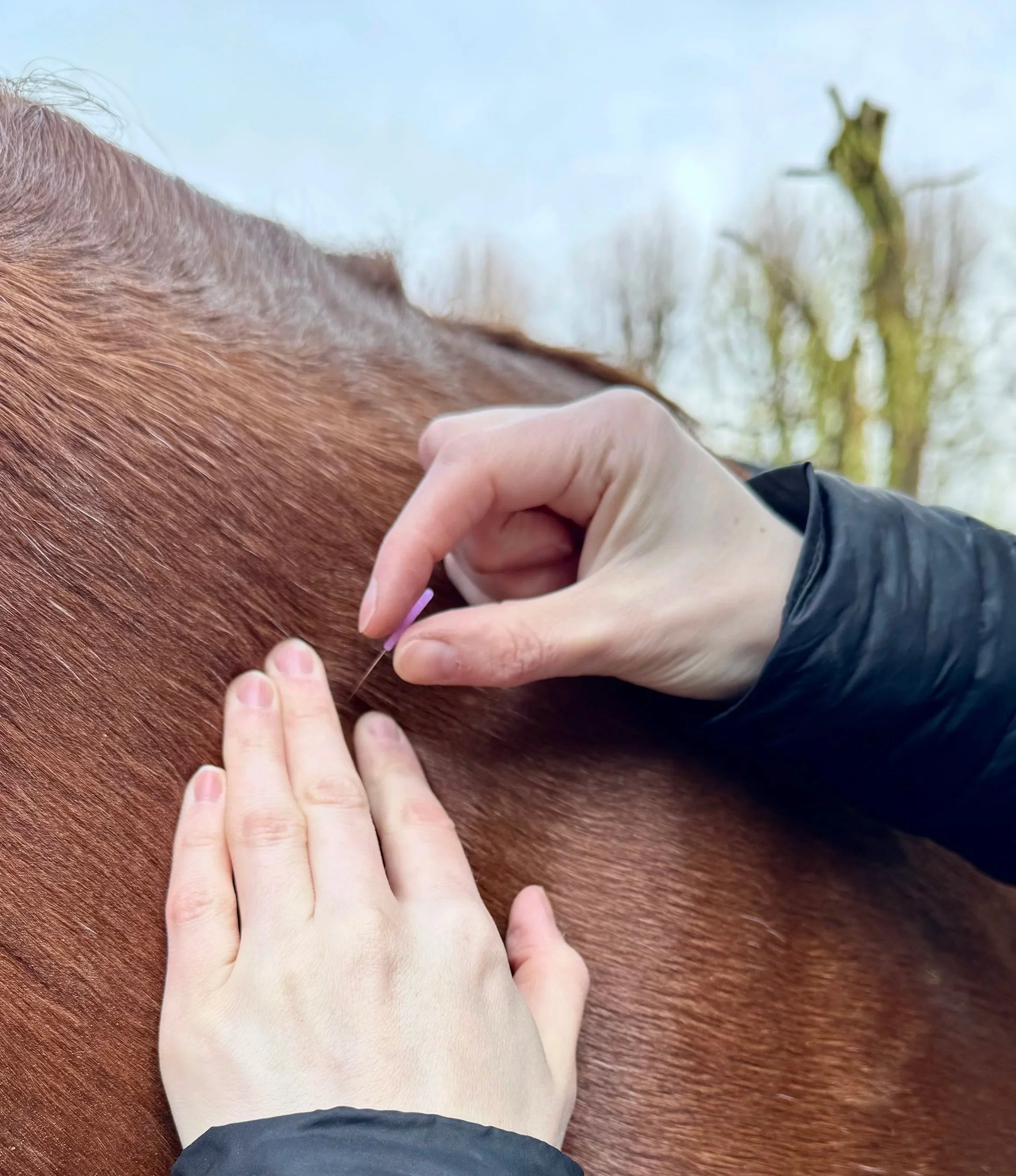
It takes the practice of acupuncture, a key component of Traditional Chinese Medicine, and applies modern medical knowledge of anatomy and physiology with the aim of altering how the nervous system perceives pain. Solid, very thin needles are placed in specific locations to achieve this. Sometimes a small electrical current is passed between two of the needles to increase their effect, called electroacupuncture.
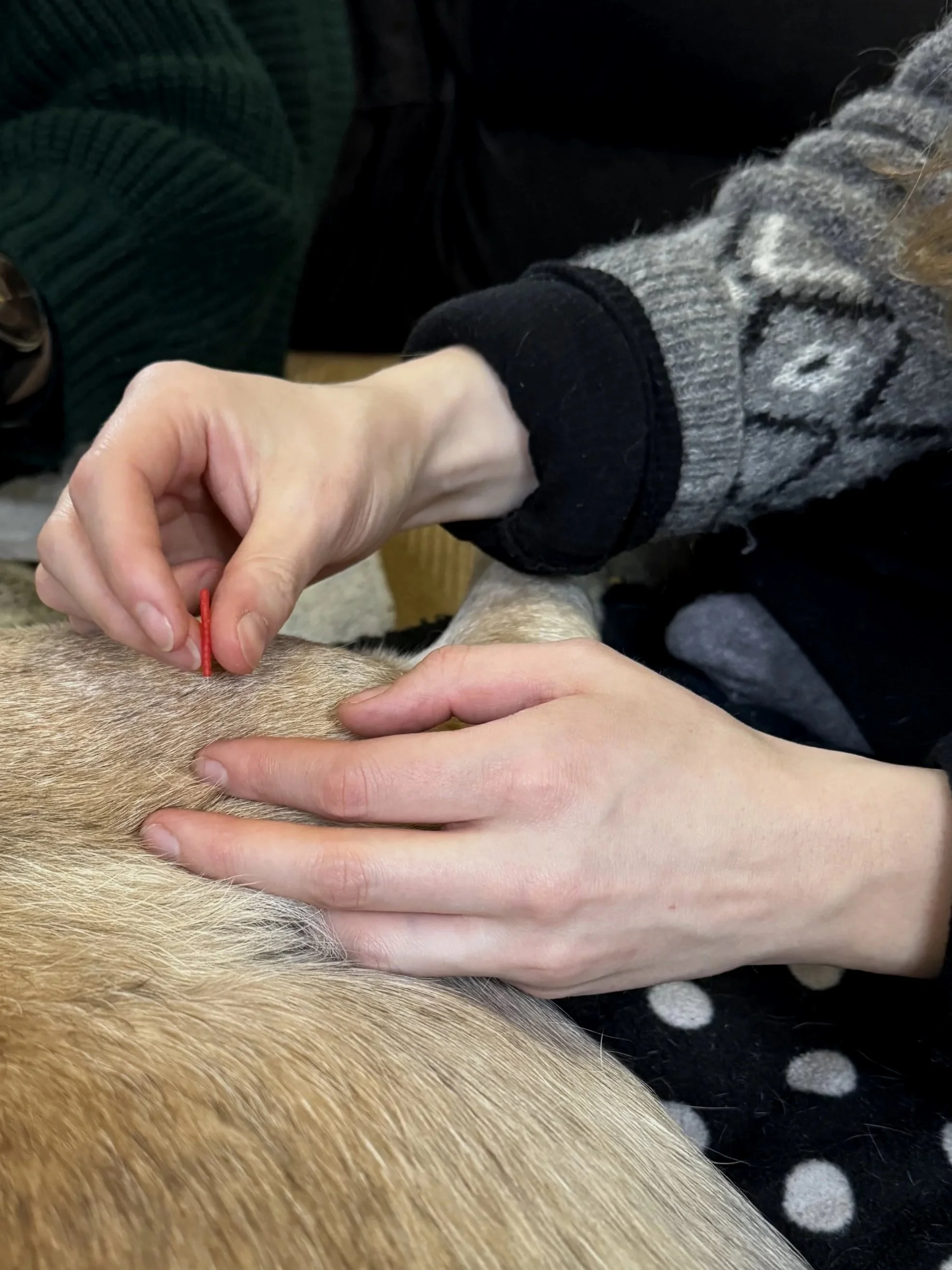
Acupuncture is best recognised as a mainstay of Traditional Chinese Medicine, dating back thousands of years. Similar practices also arose in India, described in the Hindu Vedas and there is evidence of forms of its use in Ancient Egypt, and pre-historic Europe.
The modern practice of Western Veterinary Acupuncture involves a thorough medical examination, following which needling points are selected based on neurophysiological principles. These include: trigger points, tender points, traditional acupuncture points, and segmental needling.
Acupuncture works via a variety of mechanisms. When a needle is placed, it is thought that it stimulates fast nerve fibres which are responsible for carrying the sensation of initial discomfort in an area, but not the sensation of ongoing pain. This is why discomfort can be felt on placement of the needle, but not afterwards. The ongoing sensation of pain is sensed by slow nerve fibres. Stimulating the fast fibres causes competition at the level of the spine, overriding the pain signals from the slow fibres. Other effects include the release of endorphins, stimulation of processes associated with healing, and the release of trigger points.
In veterinary medicine, the best evidence for its use is for muscular and soft tissue (myofascial) pain, and arthritic pain. It may be of use in any setting where there is an element of chronic pain, alongside modern medical practice including pharmaceuticals and physiotherapy. It has been used for skin conditions as well.

FAQs
-
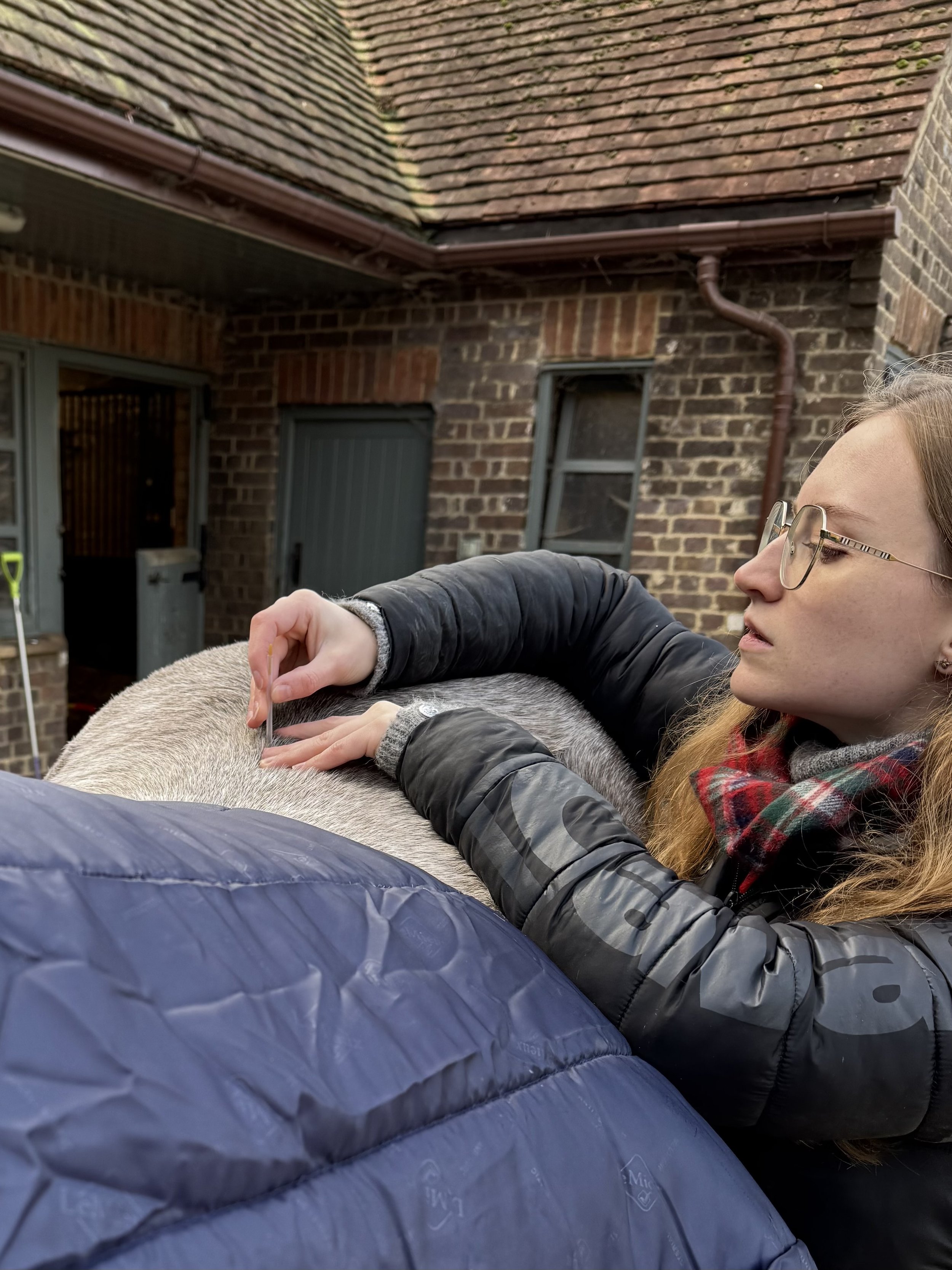
Acupuncture does not target the nerves that cause ongoing pain, but initially animals may experience an uncomfortable stimulus. Many accept the needles and relax, some even show signs of sedation. More anxious patients and those that dislike handling may not tolerate treatment as well. You’re very welcome to discuss your pet’s specific needs in a free of charge telephone consultation with Laura.
-
For most conditions a weekly session for four weeks is recommended to determine whether your animal is a good acupuncture responder. After that treatments generally are 4-6 weekly but this varies from patient to patient.
A 10% discount is applied to consultation and acupuncture fees when 4 sessions are booked as a block.
-
Generally acupuncture is very safe and there are few reported side effects in animals, but there have been problems reported in people. These are avoided with care and good anatomical knowledge, hence only a vet or a vet nurse under the direction of a vet, can perform acupuncture in animals.
After treatment your animal may seem improved, temporarily worse or there may be no change at all. Sometimes they may appear sleepier for the next 24 hours.
-
Yes! Acupuncture works best as part of a holistic approach to care, including conventional medications. Laura will work closely with your normal veterinary care team, updating them on the care she has provided. Laura will require a full previous history prior to the appointment to ensure that acupuncture is the right treatment for your animal, and will send reports to your vet after treatment. Your normal vet remains your primary point of care for your animal and their out-of-hours care, although if you are at all concerned about a reaction to the acupuncture, Laura is contactable any time.
-
Acupuncture is an alternative therapy, check your insurance policy to see if these are included.
-
Laura must have your animal’s previous medical history prior to treatment. Laura greatly values the input of the entire veterinary care team and will happily discuss aspects of treatment plans with them and will accept referrals from other vets, vet physios and associated professionals.